Let’s be honest: cars aren’t what they used to be. Even ten years ago, you could spend a Saturday afternoon under the hood with a basic socket set and a can of degreaser and feel pretty confident about what you were doing. But today? Your car is essentially a high-performance computer on wheels, wrapped in steel and rolling on rubber.
For drivers here in San Leandro, our vehicles take a beating. Whether you’re crawling through stop-and-go traffic on I-880 or navigating the steeper grades of the East Bay hills, modern tech is working overtime to keep you safe and efficient. However, that same tech makes it incredibly easy to make expensive mistakes when things go wrong.
If you’ve ever felt like your car is speaking a language you don’t understand, you’re not alone. Here are the seven most common mistakes we see people making with modern car repairs, and more importantly, how you can avoid them to keep your ride running smooth.
1. Treating Every Warning Code Like a Shopping List
One of the biggest mistakes modern car owners make is getting an OBD-II code from a cheap scanner and immediately buying the part it mentions. If the scanner says “P0101 – Mass Air Flow (MAF) Sensor,” many people drive straight to the parts store and swap the sensor.
The reality? A code doesn’t tell you a part is dead; it tells you a circuit is reading outside its expected range. That MAF code could be caused by a cracked vacuum hose, a loose air intake boot, or even just a dirty connector. By swapping parts without a proper engine diagnostic, you’re essentially guessing with your wallet.
How to fix it: Treat the code as a starting point, not the final answer. Inspect the surrounding hoses and wiring first. If you aren’t sure, a professional mechanic in San Leandro, CA can use advanced live-data tools to see exactly why that sensor is complaining before you spend a dime on parts.
2. Clearing Codes Before They’re Actually Diagnosed
It’s tempting. You see that glowing “Check Engine” light, you plug in your reader, and you hit “Clear.” Suddenly, the light is gone, and you feel a brief sense of victory. But for a professional technician, you’ve just erased the crime scene.
Modern cars store “freeze-frame data”, a snapshot of exactly what was happening (engine temp, speed, fuel trim) the moment the fault occurred. When you clear the code, you wipe that history. This makes it much harder to track down intermittent issues that only happen, say, while you’re merging onto the San Mateo-Hayward Bridge at 60 mph.
How to fix it: If a light comes on, take a photo of the code or write it down, but do not clear it until the underlying issue has been addressed. This data is vital for accurate check engine light repairs.
3. Overlooking the “Ghost” in the Machine: Your Battery
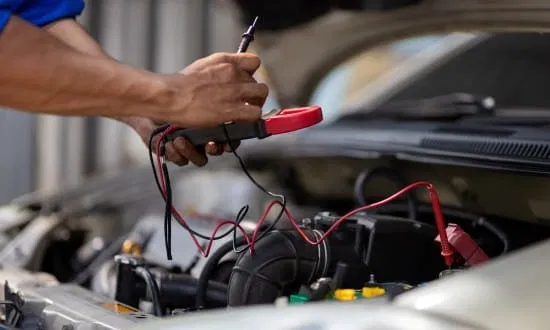
In an old car, a weak battery just meant the engine cranked slowly. In a modern car, a battery that is slightly under-voltage can cause total chaos. We’ve seen cars come in with “transmission failure” lights, “airbag” errors, and “abs” warnings all at once: only to find out the battery was just four years old and struggling.
Sensitive modules in today’s vehicles require a very specific voltage to communicate. When that voltage drops even slightly, sensors start sending “garbage” data, leading to a cascade of scary-looking dashboard lights.
How to fix it: If your car starts acting weird or throwing multiple unrelated codes, start with a professional battery test. Especially with our damp San Leandro winters, corrosion on the terminals can mimic much more expensive electrical failures.
4. Using the Wrong Chemicals on Modern Sensors
Back in the day, you could clean almost anything with a heavy-duty degreaser or brake cleaner. If you try that on a modern vehicle, you’re asking for trouble. Many components, like the thin-film elements in an air flow sensor or the plastic lenses on ADAS cameras, can be permanently ruined by the harsh solvents found in old-school cleaners.
Even something as simple as using the wrong engine oil can cause problems. Modern engines often use variable valve timing systems that rely on very thin oil (like 0W-20) to act as a hydraulic fluid. Using a “thicker” oil because you think it protects better can actually trigger a check engine light.
How to fix it: Only use dedicated cleaners (like MAF-specific spray) and always stick to the manufacturer’s fluid specifications. Regular oil services using the right synthetic blends are the cheapest insurance you can buy.

5. Trying to DIY Calibration-Sensitive Repairs
This is a big one for 2026 and beyond. If your car has lane-keep assist, adaptive cruise control, or automatic emergency braking, it uses cameras and radar sensors often hidden behind the windshield or bumper.
If you replace a cracked windshield or even just have a minor fender bender repaired, those sensors need to be recalibrated. If they are off by even a fraction of a degree, your car might think an obstacle is in the next lane over: or worse, miss it entirely. These systems require specialized targets and software that you just won’t find in a home garage.
How to fix it: For any repair involving the windshield, bumpers, or steering components, ensure the shop is performing a full system calibration. This is a critical part of general maintenance for any car built in the last five to ten years.
6. Neglecting the “San Leandro Stress” on Your Brakes
Our local geography plays a huge role in how modern cars wear down. If you live up near Chabot Park or drive the hills daily, your stability control and hill-start assist systems are constantly “nibbling” at your brakes to keep you steady. This happens behind the scenes without you ever touching the pedal.
Many drivers assume their brakes are fine because they don’t hear a squeal, but modern electronic parking brakes and traction systems can wear through rear pads faster than you’d expect.
How to fix it: Don’t wait for a noise. Have a technician perform a visual inspection of your pads and rotors during your regular tire rotation. Quality brake and suspension repair ensures these safety systems have the “bite” they need when the computer calls for it.
7. Skipping the “Digital Handshake”
Lastly, we see a lot of people who think that “installing” a part is the end of the job. For many modern components: like alternators, batteries, and even some window motors: the car’s computer needs to be “told” that a new part has been installed. This is often called “registration” or “coding.”
If you replace a battery without registering it, the car may continue to charge it as if it’s an old, failing battery, which can significantly shorten the life of your expensive new purchase.
How to fix it: If you’re doing a repair that involves an electronic module or a major electrical component, check if it requires a software reset. For most people, this is where a trusted auto repair in San Leandro becomes invaluable, as they have the factory-level scanners needed to complete these digital handshakes.
Keeping Your Tech-Heavy Ride on the Road
Modern cars are incredible machines. They are safer, cleaner, and more powerful than anything we drove twenty years ago. But they do require a different approach to maintenance. By avoiding these common pitfalls: like guessing on sensors or ignoring the importance of calibration: you can avoid the “money pit” syndrome and keep your vehicle reliable for years to come.
If you’ve got a dashboard light that won’t go away or you’ve noticed your car isn’t behaving quite right on the I-880 commute, don’t let it stress you out. Getting a clear, honest answer is the first step toward a fix that actually lasts.
Whether it’s time for your routine maintenance or you’re dealing with a confusing electrical “ghost,” our team is here to help. Reach out to JC Auto Repair today to schedule an inspection and get your car back to its best.